
Town Rundown: Banned Books Week Read-In
There is something powerful about owning the stories somebody else decided you shouldn’t read.
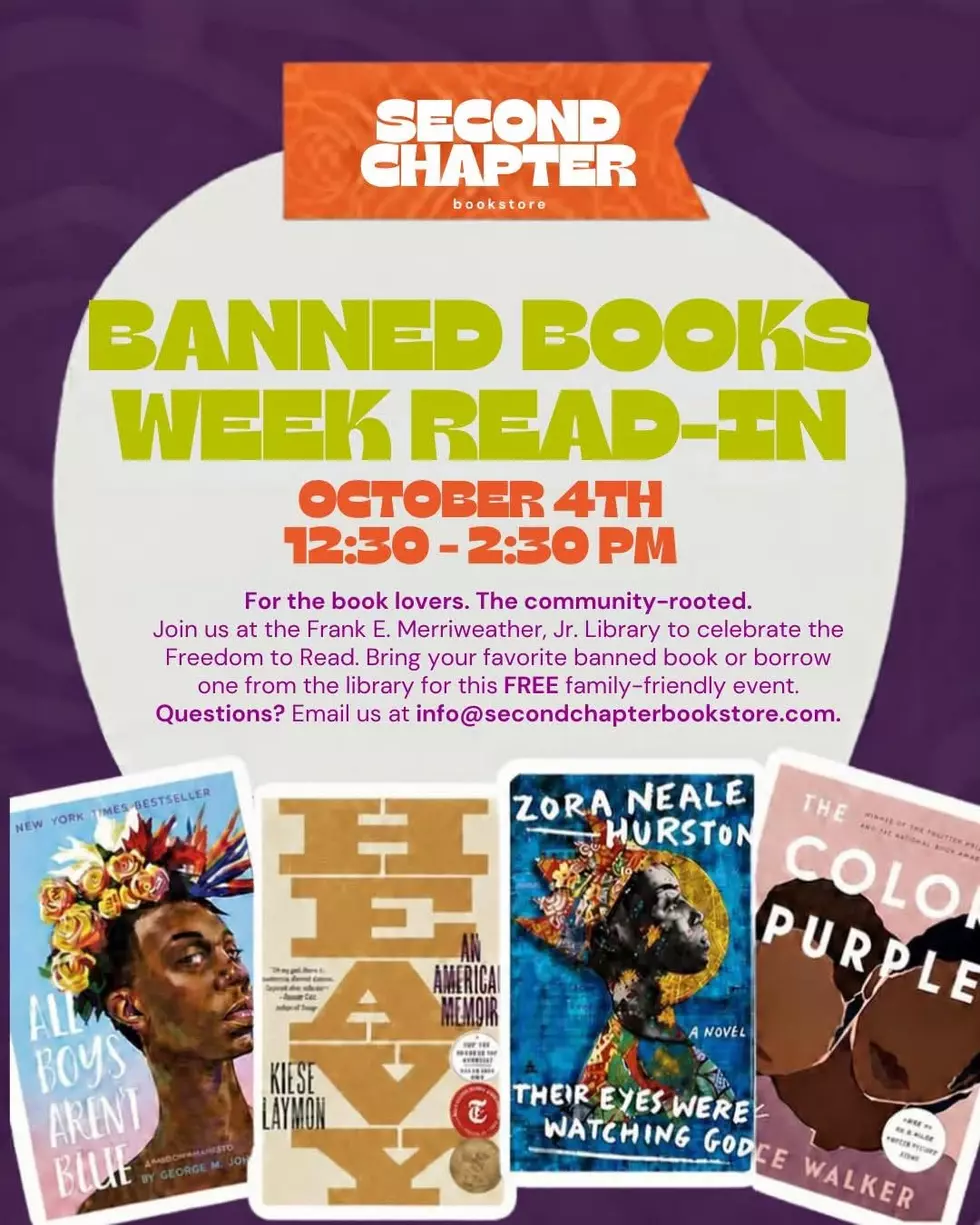
That’s why this week’s Town Rundown caught my attention. Second Chapter Bookstore is hosting a Banned Books Week Read-In on Sunday, October 4, from 12:30 to 2:30 PM at the Frank E. Merriweather, Jr. Library. The free, family-friendly event invites readers to bring a favorite banned book or borrow one from the library and celebrate the freedom to read.
For me, this conversation hits differently when we talk about Black literature.
Some of the books that have been challenged, restricted or removed from schools and libraries are the same books that tell pieces of our history, explore our experiences and introduce generations to some of our greatest Black writers. PEN America reports that the recent wave of school book bans has disproportionately affected books dealing with race and racism and books by or about people of color.
That has made me even more intentional about building my own personal library. I’ve been purchasing books that have faced challenges because I want them sitting on my shelves. I want access to the stories, the history and the perspectives that somebody somewhere decided were too uncomfortable.
And listen, my collection still has some growing to do.
Here are a few books connected to the Black experience that have been challenged or banned over the years:
- The Bluest Eye — Toni Morrison
- Beloved — Toni Morrison
- Song of Solomon — Toni Morrison
- The Color Purple — Alice Walker
- I Know Why the Caged Bird Sings — Maya Angelou
- The Hate U Give — Angie Thomas
- Native Son — Richard Wright
- Monster — Walter Dean Myers
- All Boys Aren’t Blue — George M. Johnson
These aren't random titles. The American Library Association documents many of them among frequently challenged books, including The Bluest Eye, The Color Purple, I Know Why the Caged Bird Sings and All Boys Aren’t Blue. Its diverse-content list also includes Native Son, Monster and Song of Solomon.
I understand that every book isn’t appropriate for every age, and parents absolutely have a role in deciding what their children read. But there is a difference between making a choice for your household and removing access for everybody.
That’s why events like this matter. So, Go Gettas, maybe the challenge this week is simple: read the book. Buy the book. Build your library. Have the conversation.
And while you're at it, support an independent Black-owned bookstore doing this work right here in Buffalo through Second Chapter Bookstore.
Because sometimes the very book someone wants removed from the shelf is the one that helps somebody finally see themselves on it.
More From 93.7 WBLK